Highlight Research

Training humans with machines that understand movement

What if your coach was always available, never tired, and capable of instantly analyzing your posture to help you move better, whether you’re recovering from an injury, learning a new dance move, or practicing the violin? For Gül Varol, chair in the 2025 cohort, this isn’t science fiction. It’s the ambition behind her research project: TRAINR.

“The idea is simple,” she explains. “We want to create an AI assistant that can help people improve their motor skills using only video. No sensors, no suits, no expensive hardware.”

Building a smarter mirror

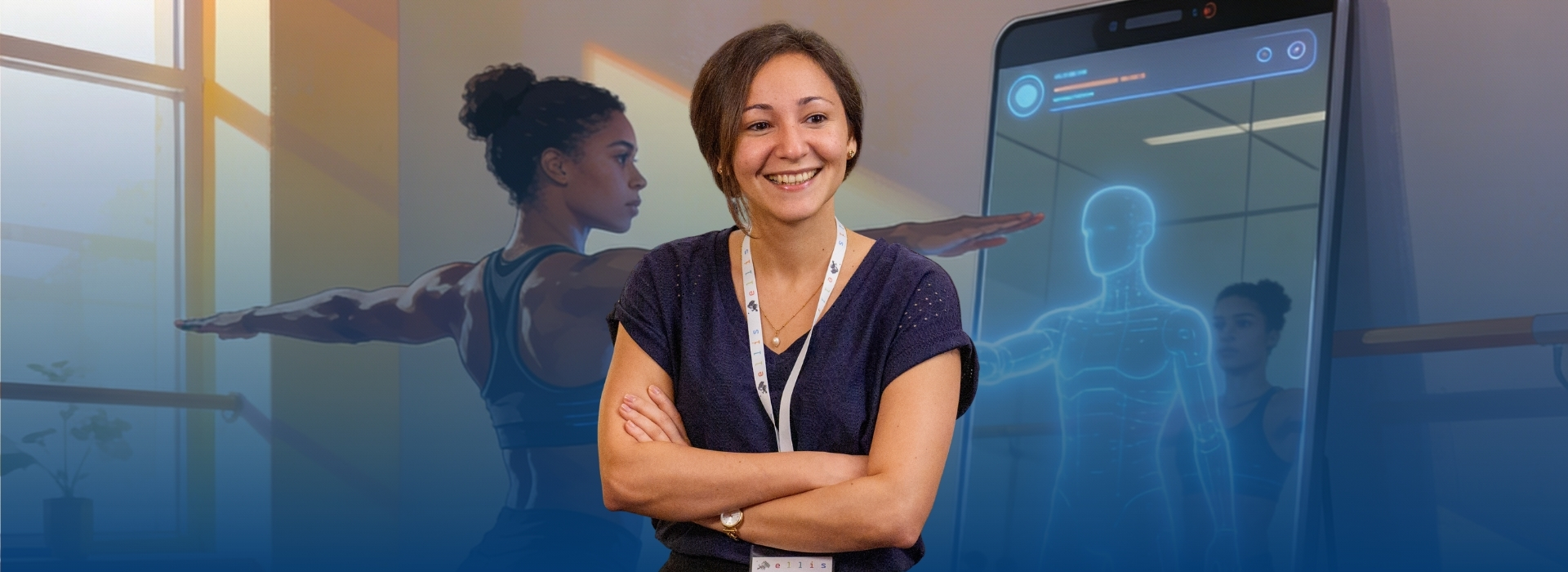
TRAINR is designed to be an intelligent partner for physical learning. Using just a standard camera feed, the system can observe how a person moves, detect common mistakes, and deliver personalized feedback in real time. The feedback isn’t limited to words, it could be a visual overlay on the video highlighting incorrect posture, or even a haptic signal sent to the relevant part of the body, if devices are available.

“Imagine doing a yoga pose, and the system points out where your alignment is off visually while also giving you a gentle nudge through haptics or a simple verbal cue. It becomes like an advanced mirror that talks back.”

Unlike traditional training apps that are built on rigid rule-based systems, TRAINR learns from real users. It adapts to individual needs, physical constraints, and long-term progress. Over time, it becomes smarter, more personalized, and more supportive, not just correcting a squat once, but helping you master your form across months of training.

Democratizing access to expert guidance

Across the globe, billions of people lack access to quality physical rehabilitation or coaching, whether due to cost, geography, or lack of infrastructure. TRAINR aims to close that gap.

“In many places, there simply aren’t enough therapists or trainers. Even in well-resourced environments, not everyone can afford frequent sessions. We’re designing TRAINR to be low-cost and widely accessible.”

Its uses go far beyond physiotherapy. TRAINR could help athletes refine their form, musicians improve finger placement, or even support the learning of sign language. At its core, it’s a vision of AI as a supportive partner for human development.

Real-time coaching in action

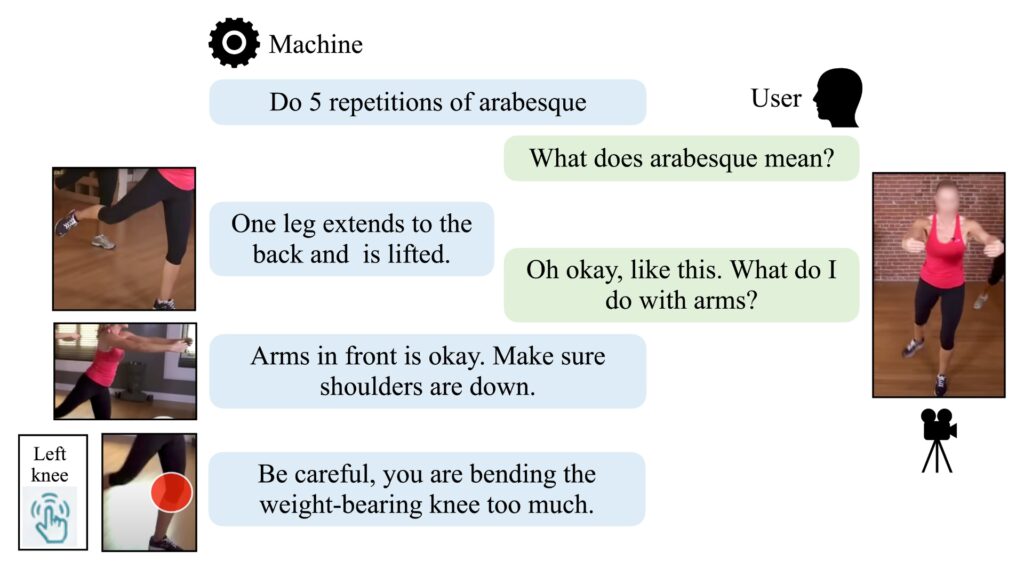
So how does it actually work? TRAINR monitors a user through video. If you’re holding a plank incorrectly, say, your hips are too low, a lightweight model spots the issue. Then, a deeper AI module decides how best to intervene: a quick visual cue on screen, a spoken instruction, or even a small vibration in your lower back.

“It’s a dialogue system,” says Varol. “The AI sees you, understands your movement, and decides the most effective way to help you improve.”

Example interaction between the user and the TRAINR system: real-time, multimodal feedback using video, dialogue, and visual cues.

The hard problems worth solving

Creating something this intuitive isn’t easy. TRAINR faces major challenges: a lack of large-scale video datasets with corrective feedback; the difficulty of generating multimodal responses in real time; and the complexity of truly personalizing instruction for different bodies and learning speeds.

And then there’s the ambition to extend beyond basic movement into the realm of fine motor skills, like teaching hand gestures for music or sign language. It’s uncharted territory.

“We’re not just building a fitness app,” says Varol. “We’re pushing AI to understand the human body in motion, in all its richness and diversity.”

A machine that gives back

What excites Varol most is the deeper philosophy behind TRAINR.

“For years, humans have trained machines by feeding them data. Now we’re at a point where machines can start to train us back, in ways that support health, learning, and self-expression. That’s a powerful shift.”

If successful, TRAINR could redefine how we think about AI and human movement: not as separate domains, but as partners in a shared process of improvement. It’s a project rooted in science, but driven by a very human goal: helping people move better, live better, and learn with more confidence.

More profiles of our 2025 chairs will be published soon, showcasing work that explores how AI can support society, science, and creativity.