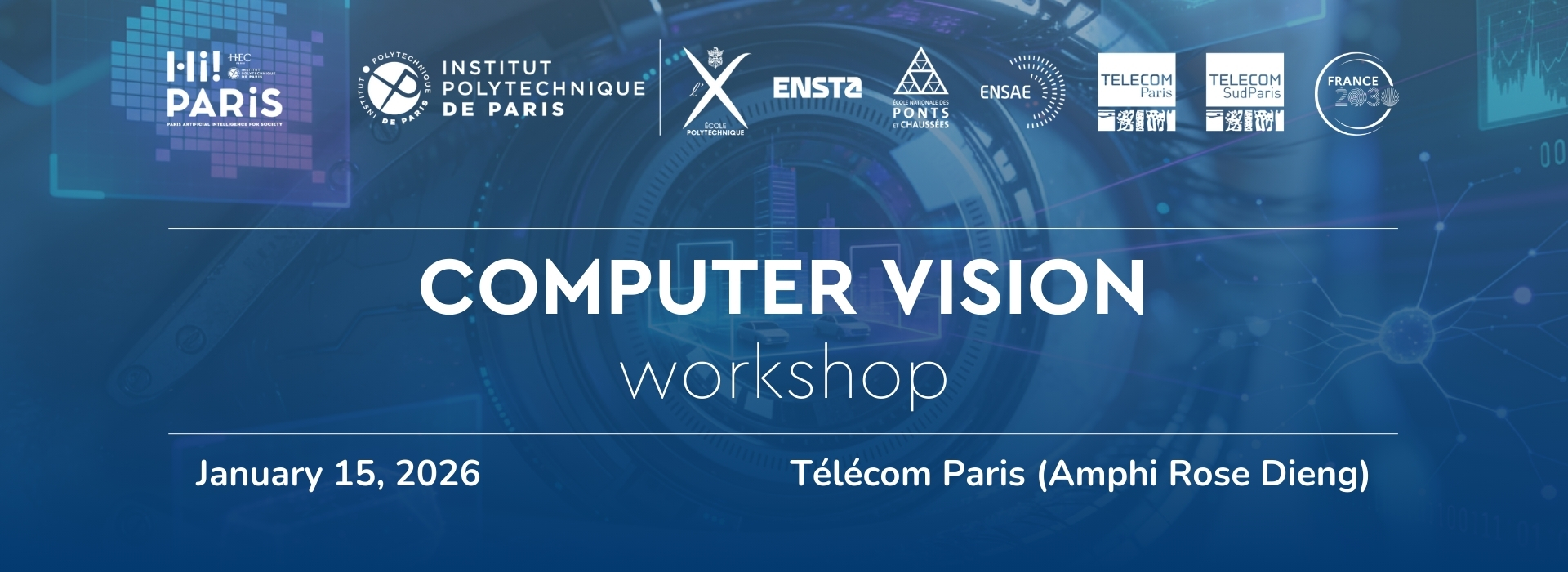
The IP Paris – Hi! PARIS 2026 Computer Vision Workshop is a collaborative event bringing together researchers, students, and professionals passionate about advancing the field of computer vision. Hosted at Télécom Paris, the […]
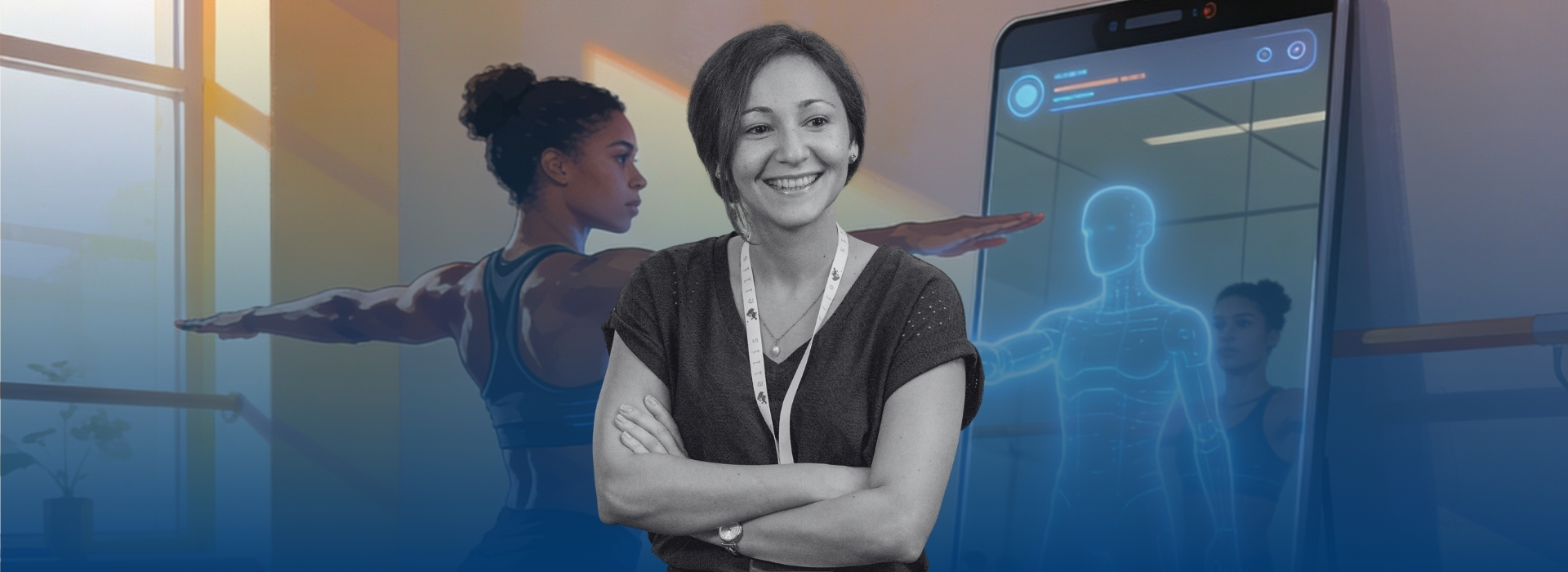
What if your coach was always available, never tired, and capable of instantly analyzing your posture to help you move better, whether you’re recovering from an injury, learning a new […]
DIM AI4IDF – Open until February 16, 2026 (1 p.m.) The DIM AI4IDF is launching its Call for Scientific and AI Event Proposals 2026, aimed at supporting initiatives related to […]
What can millions of newspaper articles teach us about democracy, representation, or inequality? For Etienne Ollion, sociologist and Hi! PARIS chair recipient, the answer lies not only in the words […]
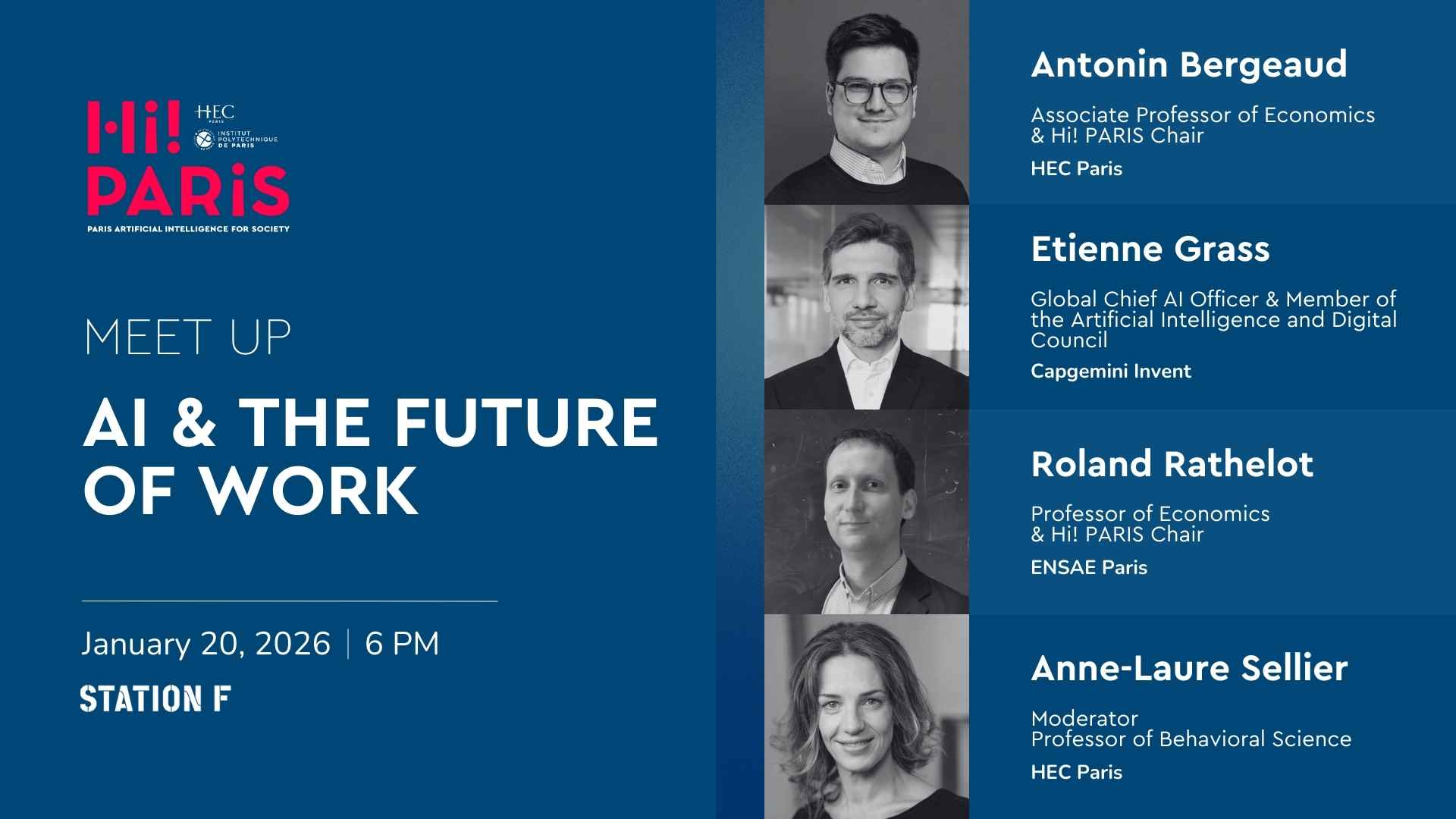
As part of the Hi! PARIS Initiatives, this Meet Up on “AI & the Future of Work” will bring researchers, industry leaders, and practitioners together at Station F. The goal: to reflect on how AI is reshaping jobs, skills, and workplace dynamics, and to explore what this transformation means for companies, policymakers, and society.
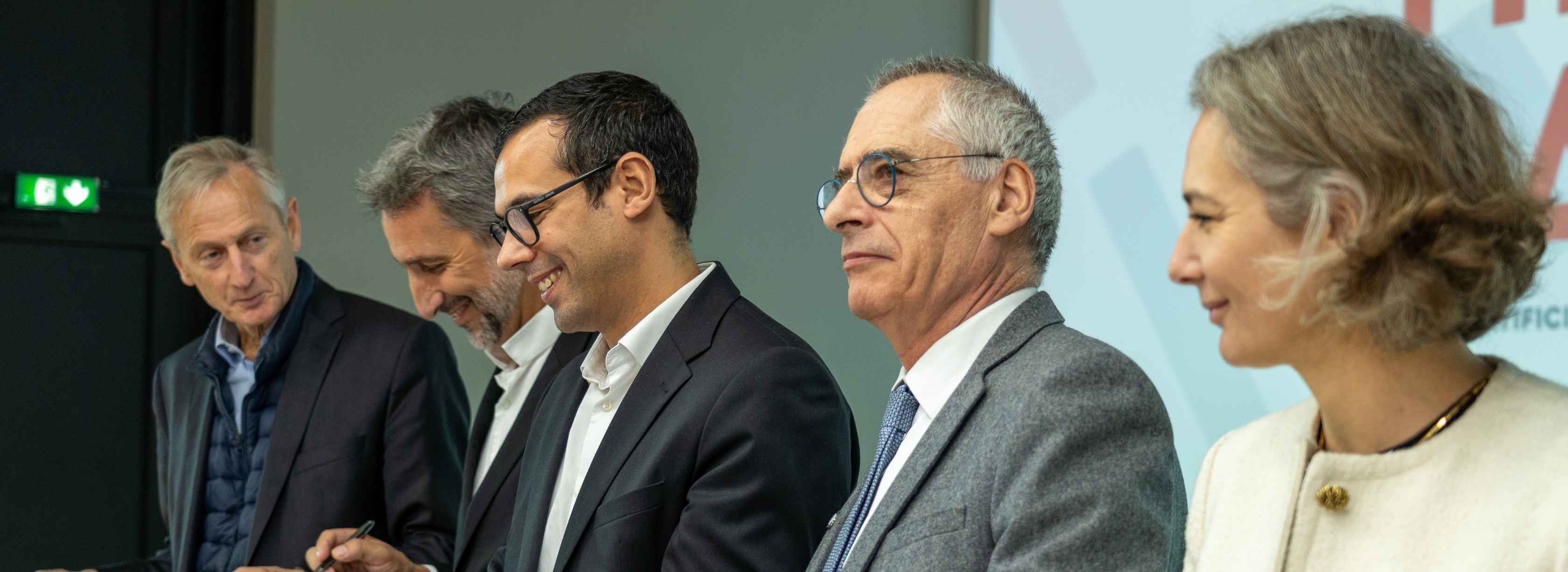
Schneider Electric has renewed its partnership with Hi! PARIS for three additional years, reinforcing a shared commitment to advance open and responsible AI. This new phase will support cutting-edge research, launch a new chair on AI and energy, and expand opportunities for students and doctoral candidates across the center.
Artificial intelligence has mastered language, vision, and even strategy games, but can it master mathematics? Amaury Hayat’s DESCARTES project explores one of the boldest frontiers in science: teaching machines not just to calculate, but to reason.
While generative AI tools continue to impress, their inner workings remain largely mysterious. Hi! PARIS Fellow Alain Oliviero Durmus is tackling this challenge head-on with his project TODO – Toward Enhanced Generative Models. By applying tools from stochastic optimal control, he’s building a stronger mathematical foundation for diffusion and flow models, aiming to make them more robust, interpretable, and ready for complex real-world applications.
What happens when artificial intelligence pushes the boundaries of image creation from flat, 2D visuals into fully controllable 3D scenes? In their work, Maks Ovsjanikov (Professor at École polytechnique) and Léopold […]
Every measurement, whether in physics, statistics, or machine learning, comes with a cost. From Heisenberg’s uncertainty principle to the limits of data prediction, Professor Xiao-Li Meng reminds us that knowledge itself is bounded by trade-offs. Precision and uncertainty are not opposites, they are partners in the same dance. In science, as in life, there is no free lunch.